



CIHC – Earl Haig Secondary School Career Panel Recap
The Canadian Institute for Human Capital successfully launched its first event at the local Earl Haig High School on May 15, 2019. We assembled a group of fantastic and inspiring panelists consisting of an entrepreneur, a bank manager, a software developer and a lawyer.
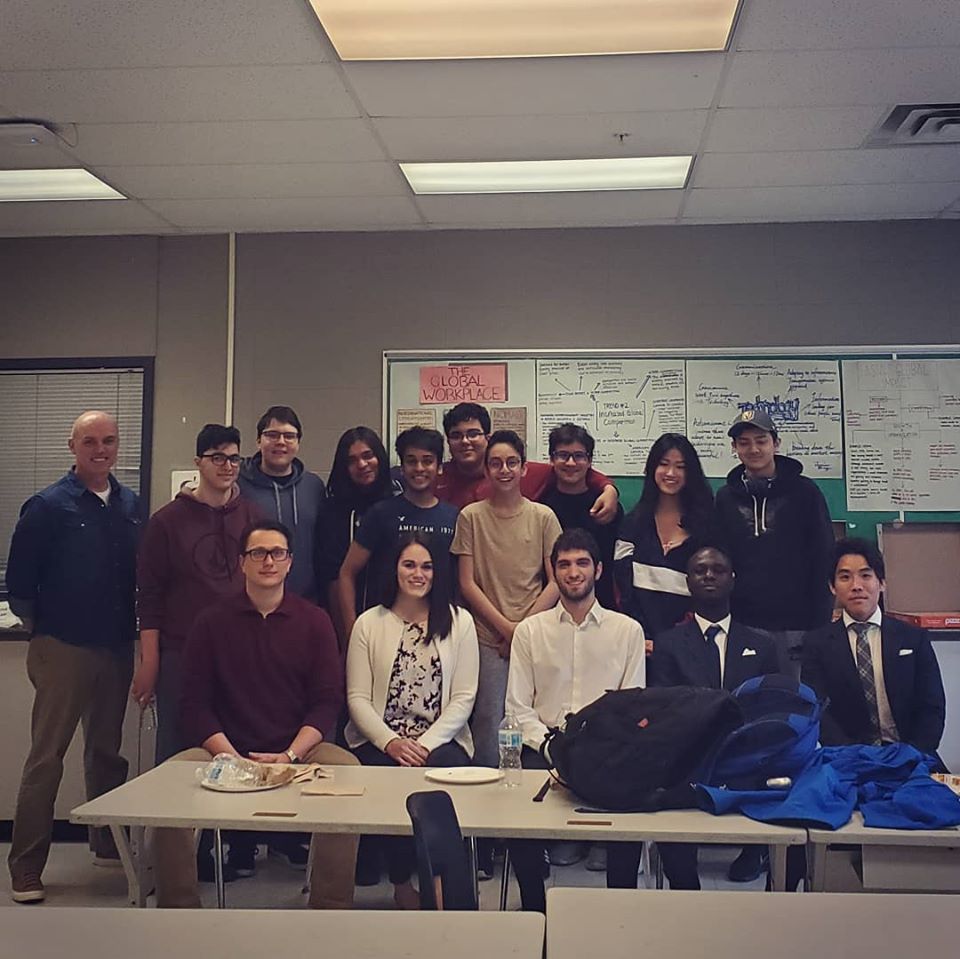 The CIHC is a new, not-for-profit organization aimed at exposing high school students to a novel, innovative way of thinking about career options, through the unique perspective of young professionals in the STEAM fields (science, technology, engineering, arts and mechanics) as well as the studies of law, politics, financial services, public sector, accounting and consulting.
The whole event was hosted by the passionate co-founders of CIHC, Tobin Ansong and Vladimir Bogdashkin, and in attendance were 10 eager and inquisitive high school students.
Before we get into the exciting details of the event, let’s have a closer look at our panelists and the expertise they brought to the floor.
The Panelists
- Ralph Maamari from CheapeEats
Ralph is an entrepreneur and the co-founder of Toronto-based startup CheaperEats. CheaprEats is a mobile ordering platform with a focus on operational efficiency across the board. With improved menu discovery, in app tipping and a more visual experience we offer business with increased revenue, happier employees and pleased customers. We also provide a large amount of free digital marketing through our social media outlets, on the ground strategies and contests which spill off into sales for your business!
- Megan MacKenzie from Meridian Credit Union
Megan is a senior manager of innovation at Meridian Credit Union, a well-established financial organization. Meridian is the third largest credit union in Canada, and the largest credit union in Ontario, serving more than 360,000 members with total assets under administration of over $23.9 billion. Meridian offers banking, wealth management, credit products and services through 92 branches, and fourteen Commercial Business Centres.
- Moe Ahmed from IBM
Moe is a software developer for multinational technology company IBM. Moe’s job requires expertise in mathematics, computer science, physics, and engineering.
- Derek Kim from Drudi-Alexiou-Kuchar LLP
Derek is a lawyer for the local Drudi-Alexiou-Kuchar legal firm specializing in (amongst others) commercial law, contract law, and employment law. Derek has a degree and a doctorate in law. He has experience in editing a law journal as well as acting as director and treasurer of the Korean Canadian Lawyers Association. As a lawyer, his excellent interpersonal skills are also a bonus.
The Introduction
After introductions were made, the founders of CIHC got the ball rolling with some interesting and thoughtful questions to inspire the students. First, the panelists were asked to take a moment to tell us a little more about their career path and to give a short overview of their current professional role.
This question was received with great interest as such a diverse group of people brought a whole range of specialties, including some unexpected ones, to the table.
The diverse group enabled the children to think about more specific and structured questions that they could pose to the panelists to help them in their personal career journey.
Engaging with Students
In an effort to make each panelist more relatable to the students, which enables them to engage more directly with the panelists, the following questions were asked.
- What is your favorite high school memory?
- Which classes did you enjoy the most?
- If you could go back in time, what are one or two pieces of advice that you would give your younger self?
- What initially attracted you to this line of work?
- How did you break in or transition into the field?
Naturally, these questions relaxed everyone enough to have a good laugh and allowed each student to have an honest evaluation of where they currently are with regards to their interests and where these may be leading.
It is very common for high school students not to have a clear idea of what they want to become, and having professionals reminisce about their professional past can give students a sense of security in that “not knowing is OK.”
Let’s Talk Business
Tobin and Vladimir then opened up the floor for more directed and professional questions that would enable the children to get a better perspective of each profession. They asked the following:
- Can you provide your perspective on current trends, challenges and opportunities within your sector?
- In the next four years, what developments and changes do you foresee in your profession?
- Talk about your job search experience and headline any advice you may have for the students.
- What can students do to improve their job prospects?
- What is your best piece of advice for someone interested in pursuing this career path?
- What do you enjoy most about this career path?
- What is the most challenging aspect of this career path?
- Which courses helped you prepare for your role?
- What strategy did you follow in applying to university, and what advice can you offer the students for this process?
- What were your undergraduate and graduate study choices?
The Students Take the Lead
Finally, the students had the opportunity to ask their questions. The questions that surfaced were a clear representation of the common concerns among high school students and included:
- Does it matter which university that I attend?
- How do I get a job at a FANG (Facebook, Apple, Amazon and Google) company?
- How can I get a job with no experience?
Once all the questions were answered, the meeting came to an end. All in all, it was a very successful day, with great reviews from both students and panelists.
We can’t wait for the next one! Hope to see you there!
